Polyester round slings are essential lifting accessories in many industries. They are commonly used for lifting machinery, steel structures, industrial equipment, construction materials, and other heavy loads.
Although round slings are designed for demanding lifting operations, they are not maintenance-free. Repeated use, abrasion, improper handling, and exposure to harsh environments can gradually affect their condition.
Regular inspection is therefore essential for identifying potential damage before it leads to an accident.
In this article, we explain how to inspect, maintain, and store polyester round slings to support safe lifting operations and extend their service life.
1. Why Is Regular Round Sling Inspection Important?
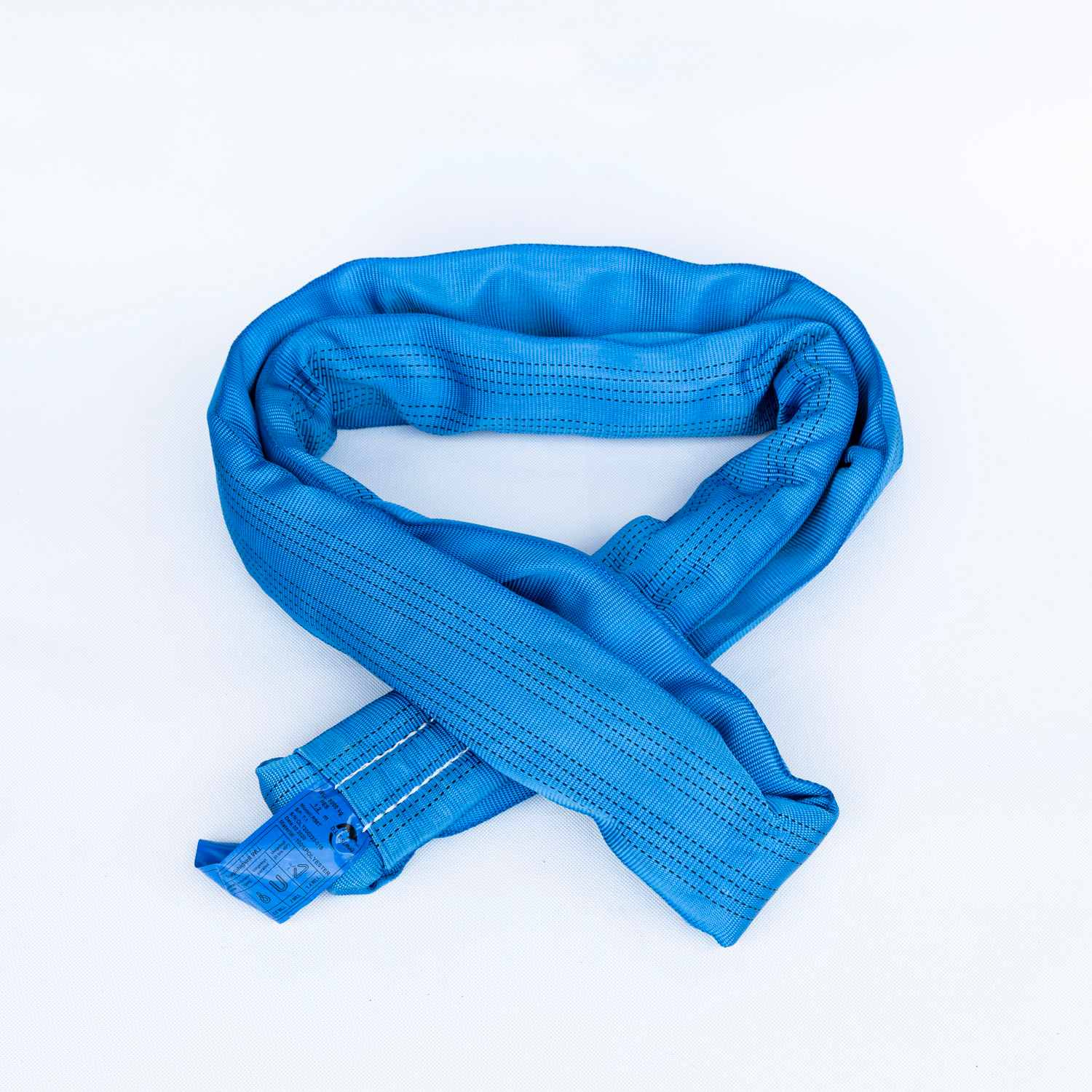
A polyester round sling consists of an internal load-bearing core protected by a woven outer sleeve.
The internal yarns carry the lifting load, while the outer sleeve provides protection against external damage.
One important point is that damage to the outer sleeve may expose the internal load-bearing yarns. Once these yarns are damaged, the sling's lifting capacity may be compromised.
Regular inspection helps users identify:
-
Cuts, tears, or excessive abrasion.
-
Damaged or exposed load-bearing yarns.
-
Broken stitching or damaged seams.
-
Chemical damage or unusual discoloration.
-
Heat-related damage.
-
Missing or unreadable identification labels.
A sling with visible damage should not continue to be used until it has been properly assessed by a competent person.
2. How to Inspect a Round Sling Before Use
Before each lifting operation, users should carry out a visual inspection of the sling.
The following areas deserve particular attention.
Check the Outer Sleeve
Examine the entire circumference and length of the sling.
Look for:
-
Cuts or holes in the protective sleeve.
-
Excessive wear caused by friction.
-
Burn marks or melted areas.
-
Stiff, brittle, or unusually hard sections.
-
Signs that the internal yarns are exposed.
Do not assume that a sling is safe simply because its outer sleeve looks acceptable. Any suspected internal damage requires further assessment.
Check the Stitching
Inspect the seams and stitching carefully.
Broken stitches, loose seams, or separation of the sleeve may indicate that the sling has been subjected to excessive wear or damage.
Pay particular attention to areas that frequently come into contact with hooks, lifting points, and load edges.
Check the Identification Label
The identification label provides essential information about the sling.
Depending on the applicable standard and product design, it may include:
-
Manufacturer's identification.
-
Working Load Limit (WLL).
-
Material.
-
Effective working length.
-
Applicable standard.
-
Traceability or identification information.
If the label is missing or unreadable, the sling should be removed from service until its identity and rated capacity can be reliably established.
Check for Chemical and Heat Damage
Polyester can be affected by certain chemicals and extreme temperatures.
Users should look for unusual discoloration, melting, hardening, or deterioration of the sleeve and yarns.
If the sling has been exposed to unknown chemicals or temperatures outside the manufacturer's specified operating range, consult the manufacturer or a competent person before reuse.
3. When Should a Round Sling Be Removed from Service?
Not every scratch or sign of wear automatically means that a sling must be discarded. However, certain conditions require immediate removal from service pending assessment.
These include:
| Damage or Condition | Recommended Action |
|---|---|
| Cut or torn outer sleeve | Remove from service and assess |
| Exposed or damaged load-bearing yarns | Remove from service |
| Broken or severely damaged stitching | Remove from service and assess |
| Missing or unreadable identification label | Do not use until identification is established |
| Heat damage or melted fibres | Remove from service |
| Chemical contamination or deterioration | Remove from service and seek assessment |
| Unknown history or suspected overload | Remove from service pending inspection |
Never attempt to repair a damaged round sling yourself using ordinary sewing equipment, adhesive, or other temporary methods.
Damaged lifting slings should only be repaired where permitted by the applicable requirements and by an appropriately qualified organization.
4. Proper Storage of Polyester Round Slings
Correct storage can help reduce unnecessary wear and protect the sling when it is not in use.
Here are some practical recommendations:
Keep slings clean and dry. After use, remove dirt and allow wet slings to dry naturally before storage.
Avoid direct sunlight for extended periods. Prolonged exposure to ultraviolet radiation can gradually affect synthetic fibres.
Store away from chemicals. Keep polyester slings away from acids, alkalis, and other substances that may damage the material.
Avoid sharp objects. Store slings in a clean area where they will not be cut, crushed, or damaged by other equipment.
Do not place heavy objects on top of slings. Excessive compression or improper stacking may cause unnecessary damage.
Where possible, use designated storage racks or containers to keep lifting accessories organized and protected.
5. Correct Handling Helps Extend Sling Service Life
Inspection is important, but correct operation is equally necessary.
Users should follow several basic practices:
-
Never exceed the rated WLL.
-
Select the correct sling configuration for each lifting operation.
-
Avoid sharp edges unless suitable protective equipment is used.
-
Do not drag round slings across rough surfaces.
-
Avoid twisting or knotting the sling.
-
Ensure that hooks and lifting points are compatible with the sling.
-
Do not expose the sling to temperatures beyond its specified limits.
-
Follow the manufacturer's instructions and applicable lifting regulations.
Proper handling helps reduce unnecessary damage and supports more consistent performance over time.
6. How Often Should Round Slings Be Inspected?
A visual inspection should be performed before each use.
In addition, periodic thorough examinations should be carried out at intervals determined by the applicable regulations, standard, manufacturer's instructions, and operating conditions.
The inspection frequency may need to increase when slings are used frequently or in demanding environments such as construction sites, steel plants, ports, and mining operations.
Users should also maintain inspection records where required by their lifting equipment management procedures.
7. Manufacturing Quality Is the First Step Toward Safe Lifting
Safe lifting does not begin when a sling is attached to a hook. It begins with the selection of suitable raw materials and controlled manufacturing processes.
At NANJING D.L.T SLING CO., LTD, we manufacture polyester endless round slings for a wide range of industrial lifting applications.
Our production process includes raw material inspection, core production, protective sleeve manufacturing, sewing, and finished product inspection.
We also pay attention to product identification and batch traceability, helping customers maintain better control over their lifting accessories.
With extensive manufacturing experience and a focus on consistent quality, we supply round slings in different capacities, lengths, and customized specifications.
Whether you need standard polyester round slings or customized heavy-duty lifting solutions, our team is ready to discuss your requirements.